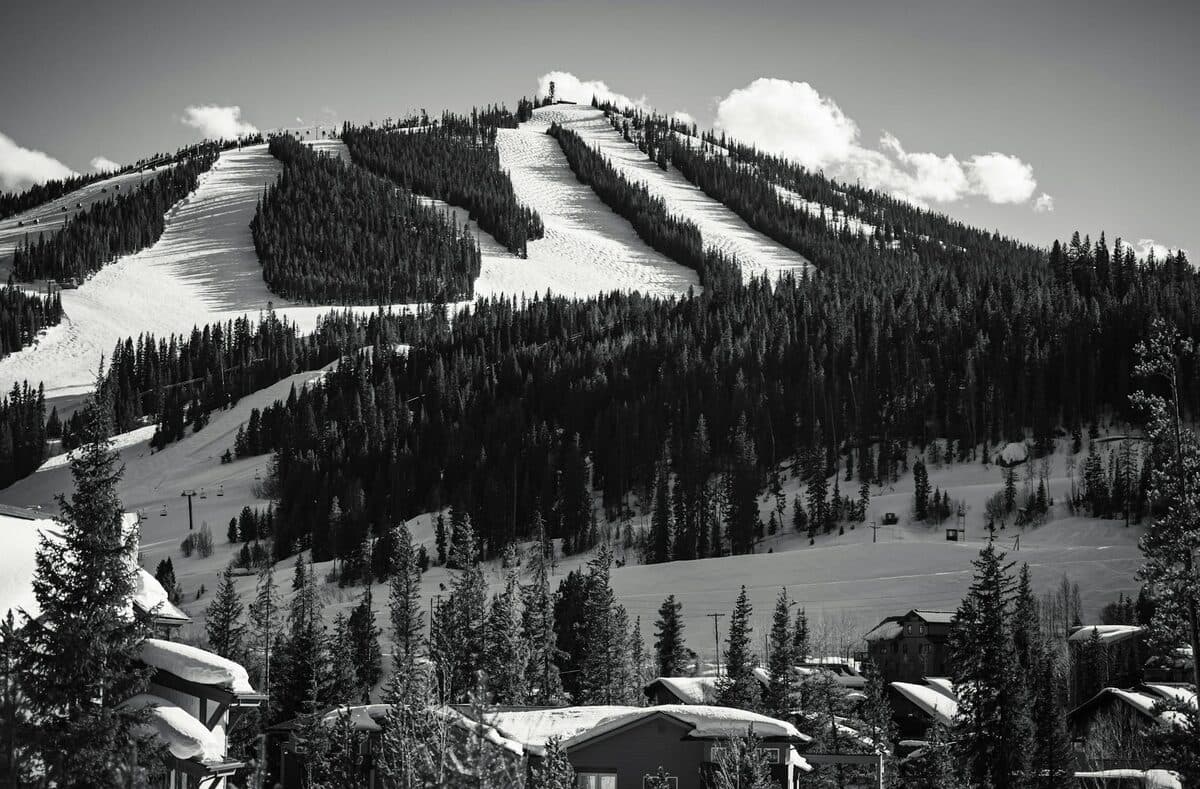
Purgatory Trail Map & Terrain Guide: Every Run Rated
Purgatory Resort covers 1,605 acres with 107 named runs served by 11 lifts. The official terrain breakdown is roughly 20% beginner, 45% intermediate, 30% advanced, and 5% expert. But like any trail map, those percentages don't tell the full story. Here's what the mountain actually skis like across all ability levels.
Beginner Terrain (Green Runs)
Roughly 20% of Purgatory's terrain is green. The dedicated learning area sits at the Columbine base with surface lifts and a magic carpet, separated from faster traffic. Once new skiers graduate from the bunny slope, Lift 2 serves longer green runs. Columbine is the standout: a wide groomed green that flows top-to-bottom with no surprises.
For a full first-day breakdown, including hour-by-hour progression, what to rent, common beginner mistakes, and ski school booking, see Best Beginner Runs at Purgatory →.
Intermediate Terrain (Blue Runs)
This is where Purgatory shines. Nearly half the mountain is rated blue, and these runs are what keep people coming back. They're long, well-groomed, and varied enough that you can ski here for a week without feeling like you're repeating the same terrain over and over.
Purgatory (the run, not the resort) is the main artery down the front side , a wide, consistent blue that lets you carve big turns and build speed. It's groomed almost daily and serves as the main route from the upper mountain back to the base.
Peace and Pandemonium are two more cruisers that offer slightly different character , Peace is mellower and more forgiving, while Pandemonium has a bit more pitch and some fun rollers that let you catch air if you're feeling it.
The intermediate terrain spans multiple pods across the mountain, which means you can explore different aspects and never ski the same run twice in a day. The front side gets sun earlier and holds softer snow. The back side stays cooler longer and often has better snow later in the day.
For intermediates looking to push into steeper terrain, Lower Hades is a solid step-up run. It's still groomed and wide, but the pitch is noticeably steeper than the standard blues. It's where you go when you're ready to start thinking about black runs but want a safety net.
Advanced Terrain (Black Runs)
Purgatory's advanced terrain is honest , not overly steep by Colorado standards, but legitimate enough to keep strong skiers engaged. The Hades area on the upper mountain is where the blacks live, and they're sustained steeps with real consequences if you blow an edge.
Catharsis is the classic frontside black , a straight shot down the fall line with consistent pitch and no bailout options. When it's groomed, it's a blast for carving fast GS turns. When it's left to bump up, it becomes a proper mogul field that'll work your legs.
Purgatory Gulch is another strong option for advanced skiers. It's a natural gully with tighter trees on the sides and a steeper pitch than the main runs. When fresh snow fills it in, it's some of the best skiing on the mountain.
The runs off Lift 8 (the upper mountain chair) offer the most consistent advanced terrain. Legends, Pandemonium Bowl, and Elliot's are all sustained blacks that hold snow well and provide long, uninterrupted descents.
Expert Terrain (Double Black Runs)
Purgatory isn't Silverton or Telluride , it doesn't have massive cliffy bowls or extreme sustained steeps. But the expert terrain it does have is fun and surprisingly varied, especially when you factor in the tree skiing.
Styx is the steepest named run on the mountain, a short but punchy double black that drops straight down with no room for error. It's maybe 200 vertical feet of sustained steep before mellowing out, but those 200 feet are legit.
The real expert skiing happens in the trees. Elliott's Trees and the glades between runs offer tight, technical skiing where you're picking your line through aspens and spruces. When it snows, these zones hold powder long after the groomed runs get tracked out.
The back bowls (accessed via a short hike from the top of Lift 8) are where locals go after a storm. It's backcountry-adjacent terrain that's technically inbounds but not patrolled , you're on your own out there. The snow quality is usually worth the effort, but you need to know what you're doing and have the right safety gear.
The Trees and Glades
Purgatory's tree skiing is genuinely underrated. The aspen and spruce glades between groomed runs are well-spaced, naturally laid out, and perfect for intermediates and advanced skiers looking to dip into tree skiing without the claustrophobia of East Coast woods.
On powder days, the trees are where you want to be. The groomed runs get skied off within an hour or two of opening, but the glades can hold fresh lines all day if you know where to look.
Tips for tree skiing at Purgatory: Start with the glades off Legends or Pandemonium , they're open enough to see through and offer natural escape routes back to groomed terrain. Avoid the trees early in the season when coverage is thin , you need at least a solid base to safely navigate the stumps and rocks.
The Bike Park (Summer)
Purgatory also operates a summer mountain bike park with lift-served downhill trails. The Frontside Bike Park and Backside Bike Park offer flow trails, jumps, and technical descents for all skill levels. If you're visiting in summer, the bike park is legitimately fun and well-maintained.
Layout and Flow
One of Purgatory's best features is how well the mountain flows. There are no long, flat runouts or confusing connections. You can access most of the terrain without awkward traverses, and the lift system is efficient enough that you're not standing in line for 20 minutes on busy days.
The Purgatory app has an interactive trail map with friend tracking and live trail status. Download it before you go , it's way more useful than a paper map and helps you find friends if you get separated.
Lift Access
The main lifts you'll use:
- Lift 1 (Village Chair) , base area to mid-mountain, accesses most intermediate terrain
- Lift 8 (Hermosa Park Express) , upper mountain, accesses advanced and expert terrain
- Lift 4 (Engineer) , mid-mountain, good for lapping intermediate runs
- Lift 2 (Columbine) , beginner area
The Bottom Line
Purgatory is an intermediate skier's paradise with enough beginner terrain to teach someone from scratch and enough advanced/expert terrain to keep strong skiers happy. It's not a hardcore expert destination, but it's a damn good all-around mountain with excellent snow, minimal crowds (compared to I-70 resorts), and a layout that makes sense.
If you're staying at one of our properties , Basecamp or Timberline , you're ski-in/ski-out adjacent with a free shuttle to the base. After a full day skiing the mountain top to bottom, coming back to a hot tub and a full kitchen is the move.
Planning a trip to Purgatory? Check availability at purgatoryunlocked.com