Spring Break Ski Trip to Durango, CO With No Crowds
A spring break ski trip to Purgatory Resort near Durango delivers 1,635 skiable acres, 105 trails, and empty lift lines without the I-70 gridlock that defines Front Range mega-resorts. Families get free parking, free lift tickets for kids 12 and under, and a real mountain town 25 minutes away for dining, hot springs, and post-ski downtime.
TL;DR
A spring break ski trip to Purgatory Resort near Durango, Colorado solves the two problems that make most family spring-break ski vacations exhausting: the I-70 gridlock that turns a two-hour Denver drive into four, and the packed lift lines that eat half your ski day. Purgatory sits 25 minutes north of Durango on Highway 550, far from Colorado's Front Range mega-resort corridor, and the resort's 1,635 skiable acres spread across 105 trails with 12 lifts that move 15,050 people per hour -- except the mountain rarely sees serious crowds even on peak weekends. Kids 12 and under ski free, parking is free, and a real mountain town with breweries, hot springs, and restaurants is a short drive away.
If you have done the big-resort spring break before -- the 4:30 a.m. alarm to beat I-70 westbound traffic, the $30 lodge breakfasts, the lift-line mazes that swallow a morning -- you already know what you are trying to escape. Purgatory is the opposite of that experience, and it is not a compromise. Let me show you exactly what a Durango spring break ski trip looks like, from tickets and terrain to where to eat and soak after the lifts stop spinning.
What makes Purgatory different from the mega-resorts?
Purgatory Resort sits in southwest Colorado's San Juan Mountains, roughly 350 highway miles from Denver, which is the entire reason the crowds are not there. Most Colorado ski traffic funnels up I-70 from the Front Range, and Purgatory is simply too far south to catch that wave. The resort is independently owned -- not on the Epic or Ikon passes -- and it draws mostly from Durango, Albuquerque, and the Texas/Oklahoma drive market rather than the Denver metro.
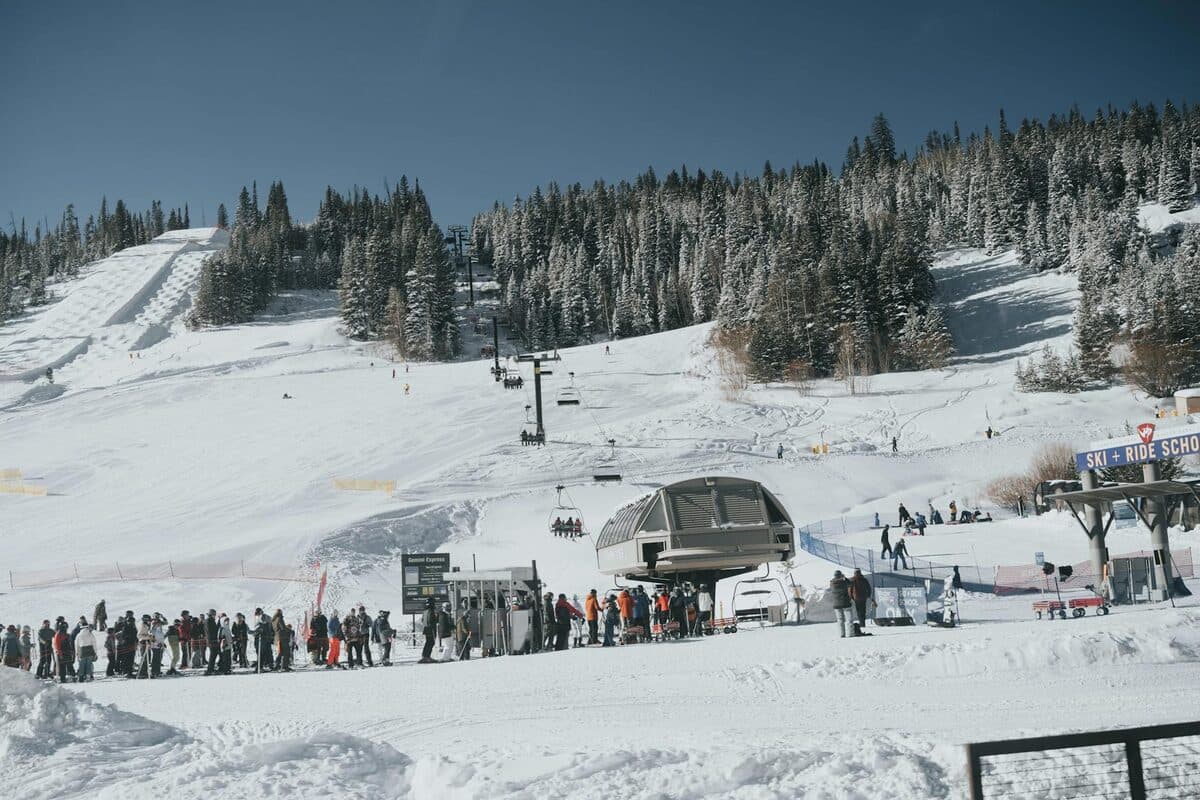
The numbers tell the story. Purgatory's 12 lifts can move 15,050 people uphill per hour, but the mountain rarely fills them all. Compare that to Summit County resorts where lift-line waits can hit 30 to 45 minutes on a spring break Saturday. One SKI Magazine writer who made the trek from Denver described the difference plainly: "From zero lift lines to empty on-mountain restaurants to no dinner reservations down in Durango", it was the easiest and most relaxing spring break ski trip her family had ever taken. They were waking up at 8 a.m. instead of 4:30 a.m. to beat I-70 gridlock.
The terrain spread matters too. With 1,635 skiable acres, 105 named trails, and four terrain parks, Purgatory's layout naturally disperses skiers across two faces: the front side rising from the base village and the backside basin served by two express quads. The trail breakdown is 20% beginner, 45% intermediate, and 35% advanced/expert, which means families with mixed ability levels can actually ski together without someone getting bored or in over their head.
How much do spring break lift tickets cost at Purgatory?
Purgatory uses dynamic pricing, so exact costs vary by date, but the ceiling stays well below what Front Range mega-resorts charge. Lift tickets at Purgatory are consistently priced under $100 per day, and advance online purchases get the lowest rates. The resort has run early-season promotions with tickets as low as $9 when bought months ahead.
The real family hack: kids 12 and under always ski free at Purgatory. No blackout dates, no purchase requirement, no fine print. For a family of four with two teenagers, that is a significant line item off the budget compared to Vail or Breckenridge where a single-day child ticket can run north of $150.
Purgatory is on the Power Pass, which also includes access to Pajarito, Sipapu, Snowbowl, Nordic Valley, and Brian Head. If your family skis more than one trip per season or you live within driving distance of any of those mountains, the pass math works fast.
Purgatory's Ski, Stay, and Soak package bundles lodging, lift tickets, and Durango Hot Springs passes: a 2-night family package (Sunday-Thursday) runs $1,219 for four people in a 2-bedroom condo, and a 4-night package is $1,849. Both include four lift tickets and four 2-hour hot springs passes. A couples 2-night option starts at $569. Midweek-only pricing means fewer people and a better deal -- the resort is explicit that quieter slopes are part of the value proposition, not just a side effect.
What is the terrain actually like for families?
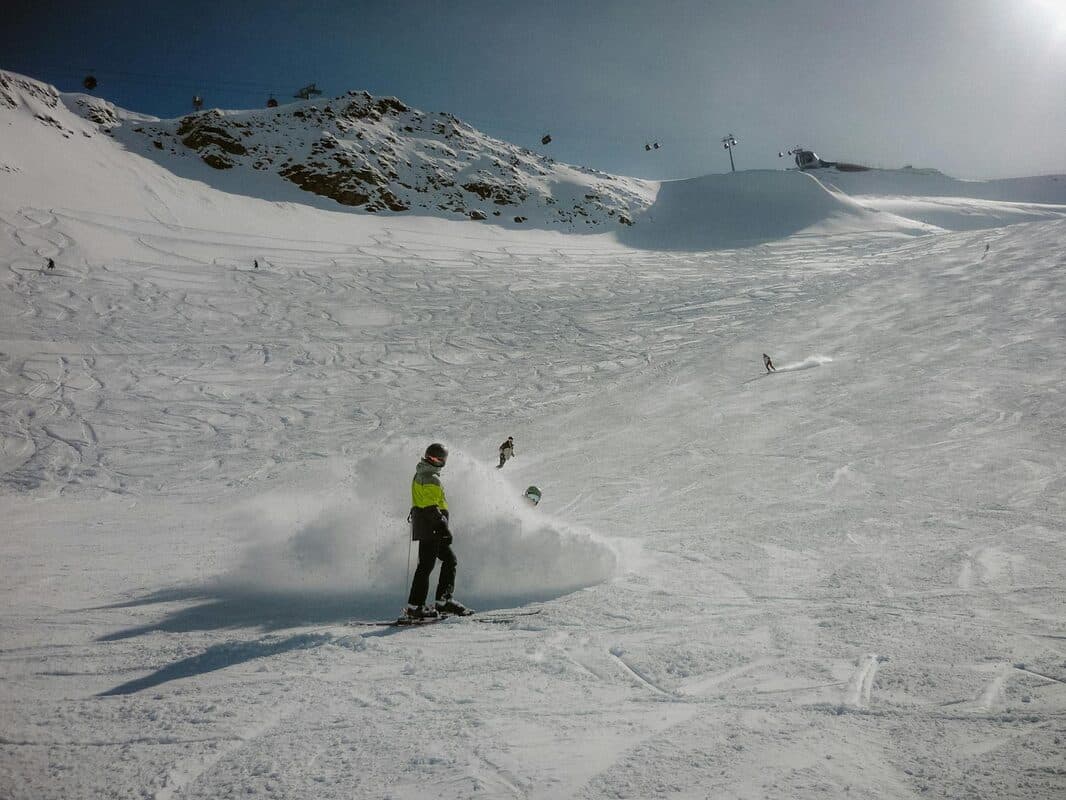
Purgatory's mountain profile is what locals call "stepped": steep pitches that mellow into rolling terrain, then steepen again. It makes the mountain feel bigger than its acreage suggests and keeps every run interesting. The front side is home to the resort's best tree skiing -- named glades like 777 and 666 are black-diamond forest runs that held powder days after the last storm during the SKI Magazine team's visit -- while Mark's Park offers a blue-level tree-skiing intro with banked, squiggly lines through less-dense woods.
The backside, reached by staying skier's left from the base and riding the Hermosa Park Express (Lift 3), opens up wide groomers like Legends that intermediates can open up on, plus steeper terrain off the Legends Express (Lift 8). Beginners have a dedicated zone around the Columbine and Graduate chairs at the base, and the long green cruiser Mercy lets newer skiers ride higher on the mountain once they are comfortable.
Four terrain parks serve the progression from first features to serious jumps: Pinkerton Starter Park for beginners, Pitchfork Terrain Garden for intermediate progression, Paradise Freestyle Arena for advanced riders, and Angel's Tread for experts. The parks are woven into the main trail network, not cordoned off in one corner, which means teenagers can lap them while parents cruise adjacent groomers -- everyone stays on the same lift circuit.
The base elevation is 8,793 feet with a summit of 10,822 feet and 2,029 feet of vertical drop. That is high enough for reliable snow preservation (average 260 inches annually) but low enough that first-day altitude symptoms are less punishing than at resorts that top 12,000 feet. For families coming from sea level, that matters. If anyone in your group is prone to altitude symptoms, read our Durango altitude sickness guide ahead of the trip.
Where should we stay during a Purgatory spring break trip?
There are three lodging tiers, and the right one depends on your priorities.
Slopeside at the resort. Purgatory Village Condo Hotel and Purgatory Lodge sit at the base of Lift 1 with true ski-in/ski-out access. The Denver Gazette notes that Purgatory Village offers shops, restaurants, and easy slope access all within walking distance. This is the zero-driving option: park once, walk everywhere. The Durango Mountain Club on the lodge's first floor serves a $5 continental breakfast that makes morning logistics genuinely easy.
Downtown Durango (25 minutes south). Staying in Durango opens up the full mountain-town experience: walkable Main Avenue, more than a dozen breweries and restaurants, and a historic charm the base village does not have. The trade-off is a 25-minute drive up Highway 550 each morning, but the road is well-maintained (check cotrip.org for conditions) and the payoff is dinner at Steamworks Brewing, a morning coffee at Oscar's Cafe, and the Durango Hot Springs Resort a few miles north of town.
Between Durango and Purgatory. Vacation rentals in the Trimble and north-durango corridor split the difference, roughly 10 to 15 minutes to the resort and 10 minutes to downtown. This is where most repeat visitors end up: quieter, more space, full kitchens, often a private hot tub.
Local's Take: Unless your kids are young enough that ski-in/ski-out logistics rule every decision, stay in Durango. The 25-minute drive is scenic and easy, and the town is what turns a good ski trip into a trip your family remembers. Nobody reminisces about the base village food court. They remember the post-ski pizza at a downtown spot, the brewery stop, the walk along the Animas River.
What is there to do off the mountain?
A spring break trip built entirely around skiing works until it does not: someone's legs give out, a teenager wants to sleep in, or you just need a change of pace. Durango has answers.
Durango Hot Springs Resort and Spa, completely renovated and reopened in 2020, offers more than two dozen soaking pools with mineral-rich water that is the best post-ski recovery in the region. The springs sit about 15 miles south of the resort and 10 miles north of downtown Durango, making them an easy stop on the drive back from the mountain.
If you need a gear day, Ski Barn and Backcountry Experience both offer full rental fleets and expert boot-fitting in Durango. Ski Barn's location near the north end of Main Avenue makes it a convenient stop on the way up to the resort for anyone who did not fly with their own gear.
For non-skiers or rest days, the Durango and Silverton Narrow Gauge Railroad runs shorter winter routes when the full Silverton line is closed, and the views through the Animas River canyon are worth the ticket. Downtown Durango has walkable blocks of galleries, shops, and restaurants ranging from Zia Taqueria for quick, excellent street tacos to sit-down dining at spots along Main Avenue. Need more pre-trip planning help? Read our winter packing list for Purgatory so you arrive with the right gear. The town is compact enough that you do not need a plan -- park once and walk.
How do I get to Purgatory without dealing with I-70?
This is the question that sells the trip. If you fly into Denver and drive, you still face I-70 to get west of the Continental Divide. But the smarter approach for most of Purgatory's core audience is to skip Denver entirely.
Fly into Durango-La Plata County Airport (DRO). DRO has nonstop flights from Dallas/Fort Worth (DFW), Phoenix (PHX), and Denver (DEN) on American, United, and Southwest. From DFW or PHX, you are looking at roughly two hours in the air, and the airport is 15 minutes from downtown Durango and 35 minutes from the resort. No mountain passes, no chain laws, no Sunday-afternoon eastbound I-70 parking lot.
Drive from the Southwest. From Phoenix, it is roughly a 6.5-hour drive through Flagstaff and the Navajo Nation to Durango, with no major passes in good weather. From Albuquerque, it is about 3.5 hours north on US-550. From Dallas/Fort Worth, the drive is roughly 13 hours, but many families make it a two-day road trip with an overnight stop in Amarillo or Santa Fe. For the DFW families in a full-size SUV with three teenagers and gear, the math is straightforward: two days of driving round-trip versus the cost of four airfares.
If you do fly into Denver. Take US-285 south through Salida rather than I-70 west to Grand Junction. The 285 route is about 6.5 hours without the tunnel-traffic lottery and takes you through the San Luis Valley, over Wolf Creek Pass, and into Pagosa Springs before arriving in Durango. It is a longer drive than the I-70/Grand Junction/US-550 alternative but infinitely less stressful on a holiday weekend.
The Colorado Department of Transportation posts real-time road conditions at cotrip.org. Before any spring drive through Colorado mountain passes, check the Colorado Department of Transportation road conditions map and the Colorado Avalanche Information Center for backcountry and pass-level snowpack data.
Is a Purgatory spring break trip actually cheaper than the big resorts?
Run the numbers for a family of four on a five-day spring break trip, comparing Purgatory to a Summit County/Eagle County mega-resort:
| Item | Purgatory | I-70 Mega-Resort |
|---|---|---|
| 4-day adult lift tickets (2 adults) | ~$400-600 (advance) | ~$800-1,200+ |
| Lift tickets for kids under 12 | Free | ~$400-600 |
| Parking | Free | $20-40/day ($100-200/wk) |
| Slope-side breakfast for 4 | ~$20 (DMC $5/pp) | ~$80-120 |
| Lodging (5 nights, 2BR condo) | ~$1,500-2,500 | ~$3,000-5,000+ |
| Total ballpark | ~$2,000-3,200 | ~$4,500-7,500+ |
The gap is real, and it is not because Purgatory is a discount product. It is because the resort is not on a mega-pass, does not pay the Epic/Ikon marketing premium, and does not sit on I-70 real estate. The savings compound: free parking, free kids' tickets, and a nearby town with restaurants that charge Durango prices, not resort-village prices.
The 2025-26 season saw Colorado ski visits drop nearly 24% to about 10.5 million, the lowest since 1991-92, driven by a historically warm and dry winter. But Purgatory's spring break window is about the experience more than the snow report: bluebird days, soft spring snow, and empty groomers are the selling points, not waist-deep powder. March and April deliver exactly those conditions with warmer temperatures that make the lift rides pleasant and the lunch breaks on an outdoor deck actually enjoyable.
When exactly should we go for spring break?
Most school districts in Purgatory's primary markets (Texas, Arizona, New Mexico) schedule spring break during one of two windows: the second or third week of March, or the week before or after Easter. Both windows have historically overlapped with prime Purgatory conditions.
The resort's 2025-26 season closed on March 29, 2026, about a week early due to an unseasonable March heat wave. In a normal season, Purgatory runs daily operations through late March or early April with weekend extensions into mid-April. The 50 Things to Do in Spring guide from Visit Durango notes that spring skiing and snowboarding at Purgatory typically runs through "April 4th, then April 10, 11, 17, and 18" for weekend bonus days.
The practical takeaway is to book early-to-mid March if your school calendar has any flexibility. That window maximizes the chance you are skiing on a deep base with spring sun rather than closing-weekend thin cover. For timing details, see our best time to visit Purgatory Resort guide. If March is booked solid, a weeknight-heavy trip in the March 15-25 band still works because the mountain is never fighting the capacity crunch that forces I-70 resorts into timed-entry systems and reservation gates.
Plan your spring break without the circus
Every family's spring break formula is different, but the Purgatory version tends to look the same in the ways that matter: sleep until 8, eat a cheap breakfast, click into skis from the village, ski uncrowded groomers and tree runs all morning, break for lunch on a deck with a view of the Needles, ski a few more laps, then head down the canyon for a hot-springs soak and dinner in a town where reservations are not a blood sport. No 4:30 a.m. alarms. No I-70. No lift-line chess. Your teenagers get their own floor of a condo instead of a pull-out couch in a hotel room where four people share one bathroom.
That is the spring break trip Mark and Sarah Caldwell are actually looking for. It exists. It is in Durango.